How many restrooms does a county fair need?
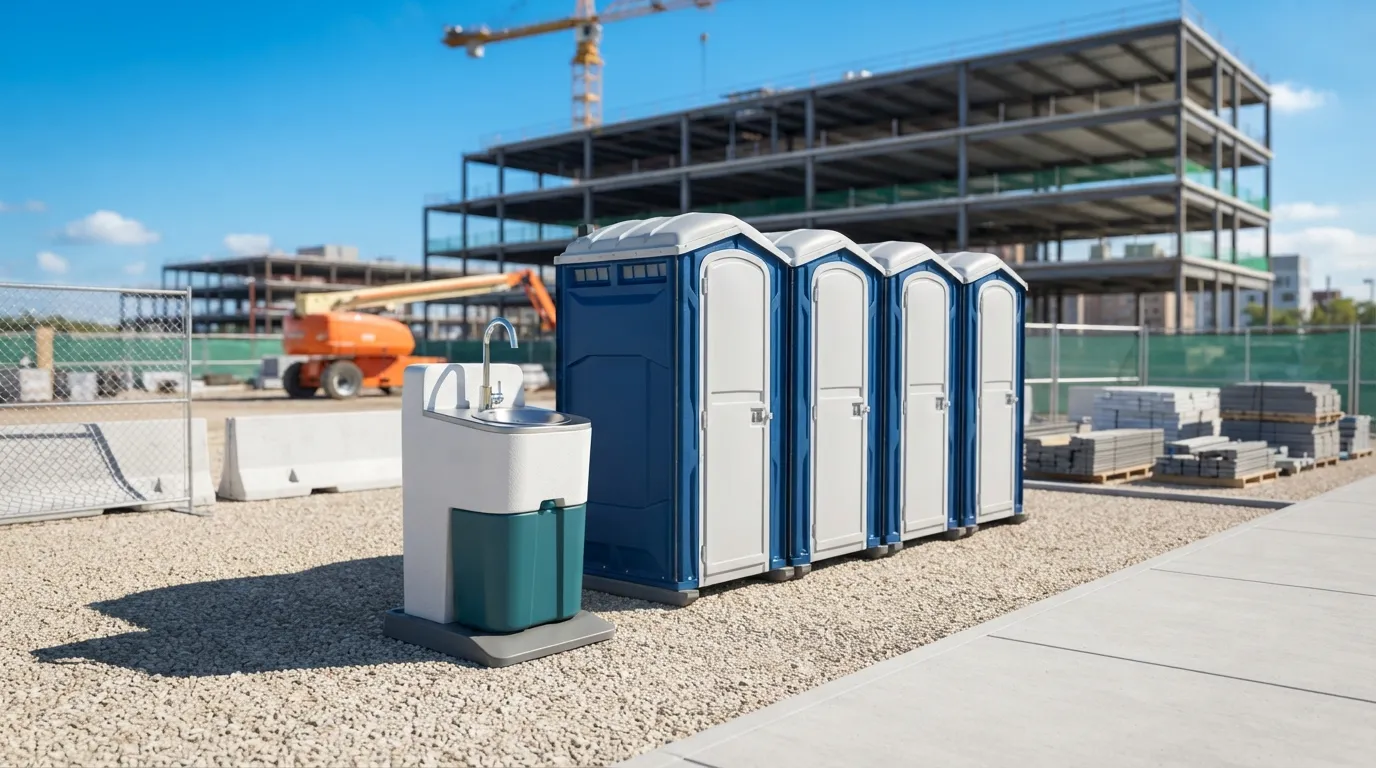
Start with attendance, not acreage. OSHA 1926.51(c) sets construction-site ratios at 1 toilet per 20 workers, and while a fair isn't a job site, fair organizers commonly lean on that same math as a floor: one unit per 20 to 30 concentrated attendees during peak hours, more if beer or food vendors are running long lines. A three-day county fair in Carlsbad pulling 5,000 people daily is a different animal than a one-night car show, so how many porta potties do i need is worth working through before you call. We usually mix standard units for general grounds traffic with a cluster of deluxe flushable units near grandstands or VIP areas, since fair boards get complaints fast when the nice seats get the same toilets as the midway. ADA coverage isn't optional dressing, either: ADA Standards section 213.2 requires at least 5 percent of a clustered bank to be accessible units, and never fewer than one. Add handwashing near every food court, since 29 CFR 1910.141(d)(2) requires soap and a way to dry hands, not sanitizer alone. For fairs stretching multiple days we also price out a restroom trailer rental for staff and vendor use, keeping the crowd units separate from back-of-house traffic.
What does it cost to rent restrooms for a county fair in Carlsbad?
Fair pricing runs by event day, not a flat weekly rate, because setup, servicing frequency and teardown all scale with attendance. Below is what a typical multi-day fair budget looks like once you separate unit types.
| Unit | Day Rate | Notes |
|---|---|---|
| Standard unit (event) | $200 - $800 | scales with volume ordered |
| ADA unit | $200 - $400 | per unit, per day |
| Deluxe flushable | $85 - $1,200 | wide range reflects trailer vs. single-unit |
| Delivery fee | $100 - $500 | one-time, per site |
Multi-day fairs often land closer to the event-rate band on the porta potty rental cost page rather than the daily rate, since servicing and standby units get baked into a single quote. If your fair runs a full week, ask about monthly porta potty rental pricing instead, since some fairground contracts span setup, run, and breakdown as one long rental rather than several short ones. We also handle the site logistics: a roll-off dumpster rental parked near the food vendors keeps grease and packaging from piling up, and a temporary fence rental can cordon off the service yard where the tanks get pumped. Carlsbad fairground layouts vary lot to lot, so we walk the site before quoting rather than pricing off a satellite photo.
Why do fairs need more than just toilets?
Because a fairground is really a small temporary city for three or four days, and sanitation is only one piece. Food vendors need grease trap pumping if they're running fryers on-site long enough to fill an interceptor, since a grease interceptor gets serviced once fats, oils, grease and solids hit 25 percent of the liquid depth. Livestock areas or 4-H barns often need a holding tank rental for wash-down water, and general grounds lighting after dark falls under OSHA 1926.56(a) illumination guidance if crews are working the grounds past sunset. Carlsbad fairs pulling power from generators instead of shore power should also plan for temporary power pole service, since GFCI protection under OSHA 1926.404(b)(1)(ii) matters anywhere water and electrical cords share the same footprint. If the fair includes a beer garden or a paint-your-own-pottery booth, OSHA 1926.51(f)(1) washing-facility rules apply specifically where paints, coatings or similar contaminants are in use, so a handwashing station belongs right at that booth, not just at the food court. We also stage storage container rental units for vendors who need lockable overnight storage between fair days, which cuts down on load-in and load-out time each morning.
Carlsbad venues draw crowds from well outside the city limits, and we already cover the towns feeding into it: Lake San Marcos sits 6.4 miles east, Elfin Forest is 9.2 miles southeast, and Rancho Santa Fe is 12.8 miles southeast, so trucks servicing your fair aren't coming from across the county. Check our service areas page if your fair draws from further out.
How far in advance should I book county fair restrooms?
Book as soon as your gate estimate firms up, ideally 60 to 90 days out for a multi-day fair. Fairground season compresses everyone's calendar at once, and ADA units, deluxe trailers and grease interceptor slots go first. Use the request a quote page to lock a date.
Do fair restrooms get serviced during multi-day events?
Yes. High-traffic fair units typically need daily servicing rather than the once-a-week baseline described in ANSI/PSAI Z4.3 for lighter use. We schedule service windows before gates open or after close so trucks aren't crossing foot traffic mid-day.
Can I mix standard and deluxe units on one fairground?
Yes, and most fairs do. Standard units cover general midway traffic while deluxe flushable units go near grandstands, sponsor tents or paid VIP areas. See portable restroom rental for how the two compare side by side.
Are handwashing stations required at food vendor booths?
Functionally, yes. 29 CFR 1910.141(d)(2) requires soap and towels or a hand-drying device, and hand sanitizer alone does not satisfy it. Every food booth row should have a dedicated station, not one shared unit for the whole court.
What happens if the fair runs longer than expected?
Call us before the last scheduled service day. Extending a multi-day fair is usually a matter of adding service visits and adjusting the porta potty rental per day rate rather than re-quoting the whole event from scratch.
Next step
Get a delivery date
Tell us the address, the dates and the headcount. We size the order and confirm the route.